Case IH Power Tab

Farm Futures

   Search Site:   Saturday, May 26, 2012 | Bookmark This Site   
Skip Navigation Links
Home
Markets
News
Weather
Farm Futures NOW!
Magazine Online
RSS News
Land For Sale
Mobile
Subscribe
Reprints
Register
Login
About Us
Advertise
 
Share This
 

Organizations, Congress Gearing Up for the Next Farm Bill

Policies are being formed, reports are being released and hearings are being held.
Compiled by staff 
Published: Jul 21, 2011

In preparation for writing the 2012 Farm Bill, the American Enterprise Institute has released a series of papers on how to best restructure agricultural policy, and save perhaps expenditures over the next ten years. The papers address: crop insurance, crop subsidies, conservation, ethanol, sugar, disaster aid, R&D, dairy, subsidies, global poor, trade, and Title I.

One report says the direct payment program has no social equity justification.  Abolishing the program would save $50 billion over the next ten years. And as for crop insurance another report says the U.S. federal crop insurance program has become one of the most expensive ways of transferring income to farmers.

Yet another report says the financial stress suffered by dairy farms in recent years underscores the fact that U.S. dairy policy does not protect dairy farms from market risks; in many respects, dairy policy magnifies those risks.

And another report states that price supports and countercyclical payments are likely to remain irrelevant for commodities like corn, soybeans and wheat, but it may become relevant again for cotton rice and wheat.

Other groups are beginning to form policy positions for new farm legislation.  The Board of Directors of the National Association of Conservation Districts has approved a set of principles to guide the association's advocacy efforts in advance of the 2012 Farm Bill. NACD President Gene Schmidt says the principles support conservation programs that are resource-driven and locally-led, with sufficient flexibility to direct funding to local priorities and resource concerns. He says these programs are crucial to the health and viability of agriculture and rural America.

The principles call for a Farm Bill Conservation Title that: 1/ Is resource-driven and locally-led. 2/ Fully funds technical assistance needs for planning and program implementation. 3/ Maintains the funding commitment made in the 2008 Farm Bill. 4/ Consolidates NRCS Farm Bill conservation programs to improve efficiency. 5/ Maintains a commitment to conservation practices on working lands that produce much-needed food, feed, fuel, and fiber. 6/ Strengthens education and outreach efforts to enhance producer knowledge of conservation systems. 7. Supports sustainable and renewable energy from agriculture and forestry. And 8. Supports new approaches to conservation and new conservation technologies.

The principles were approved this week during the NACD 2011 Summer Board Meeting and Legislative conference in Washington, D.C.

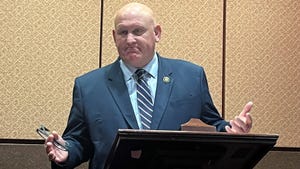
Also in Washington this week, the House Agriculture Committee's Subcommittee on Conservation, Energy, and Forestry held a public hearing Wednesday to review energy and forestry programs within the subcommittee's jurisdiction in preparation for writing the next Farm Bill. Subcommittee chairman Representative Glenn 'GT' Thompson, R-Pa., explained that the farm program audits provide us a detailed, comprehensive view of these programs to ensure that each title is being carried out in a manner consistent with its purpose.

"In a difficult fiscal environment, we must make efficient use of taxpayer dollars while also making certain that our farmers, ranchers, and forest interests remain competitive and are able to offer an affordable supply of both domestic food and energy," Thompson said. "The information shared today brings us a step closer to understanding the committee's priorities as we draft these new titles and move forward with the next farm bill."

Meanwhile, Ranking Member Tim Holden, D-Pa., noted that the energy title of the 2008 farm bill was crafted to encourage this country to move toward energy independence. He says as they begin to discuss reauthorization of these programs they must all work together to make certain taxpayer dollars are being spent wisely and as intended.


Permalink: Click here

Tagged: farm, farm bill, insurance, wheat, soybeans

Comments
Read comments from others and share your own thoughts.
Please provide the answer to the following question:

 = 
The amount of money spent on agriculture is so little in the big picture. The DCP payments should be sacred because it does go to production ag. CRP and SAFE programs have ran there lifes and have became a retirement program for farmers who mainly have been out of production ag for twenty five years. A new generation of young farmers are waiting in the wings and need assistance to be able to stay in the food production business with price protection as well as availibilty of farm ground which has not produced a bushel of food since CRP was introduced. We all know that there will be budget cuts but we need to make them where they are needed.
Posted by GP on July 21 at 9:40 AM
 
Search this site:   

Read More Stories
USDA Seeks Comment on Report Timing
Read this storyWith new market hours,USDA is looking into the right time to release information to the market.
Read this story

Weekend Forecast Changes Pivotal for Grain Futures
Read this storyEurope remains a concern, but the big driver on Tuesday will likely be the state of next week’s anticipated Midwest rains.
Read this story

Farm Markets Rise Ahead of Holiday
Read this storyOvernight boost based on positive comments from Europe aimed at pressuring Germany.
Read this story

 
USDA Seeks Comment on Report Timing
Afternoon Recap by Arlan Suderman
Weekend Forecast Changes Pivotal for Grain Futures

The Buzz: Grain Market Chaos Continues
Morning Call by Bryce Knorr
Weekly Fertilizer Review
Satellite Imagery Shows the Good and the Bad
CRP Signup Results Announced
Farm Markets Rise Ahead of Holiday
Livestock Call By John Otte
Top 50 Tags
4-H afternoon recap American Farm Bureau Federation American Soybean Association animal health arlan suderman biodiesel biofuels bryce knorr BSE Bushel checkoff cotton Drought Environmental Protection Agency EPA ethanol Extension extension service farm farm bill Farm Bureau farm futures farm futures magazine farm futures market farm progress Farm Service Agency farmfutures farmfutures.com farming farmprogress.com fertilizer FFA free trade agreement Harvest insurance labor legal National Cattlemen's Beef Association National Corn Growers Association NCGA soybean soybean association soybeans SURE usda wheat winter wheat www.farmfutures www.farmfutures.com