Case IH Power Tab

Farm Futures

   Search Site:   Saturday, May 26, 2012 | Bookmark This Site   
Skip Navigation Links
Home
Markets
News
Weather
Farm Futures NOW!
Magazine Online
RSS News
Land For Sale
Mobile
Subscribe
Reprints
Register
Login
About Us
Advertise
 
Share This
 

FTA Passage Expected in September

U.S. cannot afford further delays in approving pending trade agreements.
Compiled by staff 
Published: Aug 9, 2011

As the U.S. Congress waits to vote on free trade agreements with South Korea, Panama and Colombia, South Korea's FTA with the European Union went into effect July 1 and Colombia's FTA with Canada will take effect Aug. 15. U.S. Grains Council Director of Trade Policy Floyd Gaibler says a delayed vote would be unfortunate. Gaibler says the lack of these agreements diminishes the nation's ability to be competitive and threatens further erosion in U.S. corn exports to Colombia.

But Congress may not wait very long, prior to the August recess, Senate Majority Leader Harry Reid, D-Nev., and Senate Minority Leader Mitch McConnell, R-Ky., announced that they had reached agreement on moving the pending trade deals forward. Gaibler hopes all three FTAs will be approved by Congress sometime in September. As the political and economic pressure to create more jobs becomes more apparent, he say he believes Congress and the President will come to an agreement on a trade jobs program that has held up the FTA votes.

Secretary of Agriculture Tom Vilsack says the Administration is excited about getting these free trade agreements approved as soon as possible and begin benefitting from the $1.9 billion of additional agriculture opportunity in Korea and the several hundred million dollars represented by Colombia and Panama.

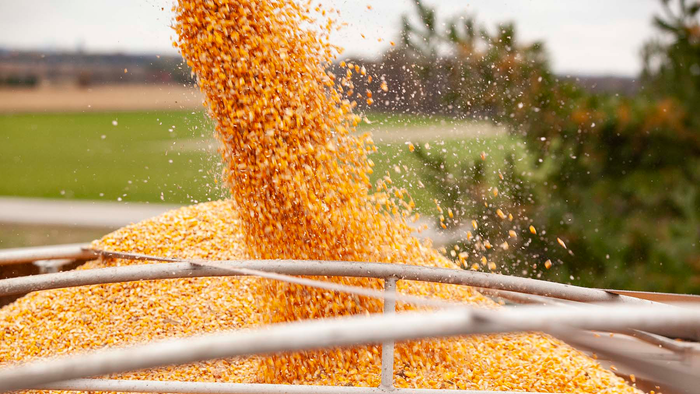
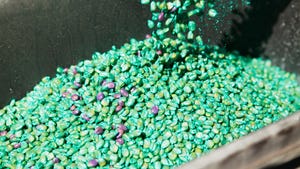
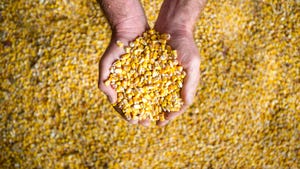
For U.S. corn farmers, Gaibler says failure to approve the Colombia agreement has been especially costly. Colombia was the sixth-largest U.S. corn market and was growing until 2009, when Colombia's trade agreement with South America's Mercosur nations reduced tariffs on Argentina and Brazil to 6.9%, a level that will continue to decline until it reaches zero in 2018. If Congress fails to pass the Colombia FTA, Gaibler says U.S. corn will continue to face a 15% tariff.


Permalink: Click here

Tagged: fta

Comments
Read comments from others and share your own thoughts.
Please provide the answer to the following question:

 = 
Pending free trade agreements with Korea, Colombia and Panama are bad for American farmers and must be rejected if we are to preserve our way of life. All three trade treaties are based on NAFTA-style policies which have displaced American farmers while sending jobs that support our rural communities offshore. In fact our leading export is jobs and we reward companies that outsource jobs. Since NAFTA took effect, the United States has lost 300,000 farms and millions of jobs. Major commodity groups and agribusiness organizations are making dubious claims that there will be massive export gains for farm products as a result of these free trade agreements (FTAs). The American Farm Bureau Federation Farm has released a study that estimates the Korea FTA would result in $1.65 billion in additional U.S. agricultural sales - but the Farm Bureau’s figures only look at gross exports while never including expanded imports. Net trade is what matters. The Farm Bureau’s fuzzy math also arbitrarily assumes an automatic 10 percent increase (a figure pulled out of thin air) for U.S. market share in Korea for every American agricultural sector, despite a finding from the U.S. International Trade Commission (USITC) that says corn, soybeans and wheat would be net losers, and rice is not even covered in the Korea FTA. The USITC projects many American agricultural sectors would face a worsening trade balance were the FTA to be implemented. This is a very serious manipulation. Loopholes in the FTAs rules-of-origin promote “leakage”, so countries such as China and Vietnam are allowed to gain at our expense. Since only 35% of a product’s value must be added in Korea, there is a major trans-shipment risk from China in processed foods. Tons of contaminated Chinese honey is already flowing into the U.S. and we should not be allowing food processed in the U.S. or Korea but grown elsewhere to get FTA benefits such as the duty-free access provided by the deal. U.S. cattle and beef producers will also be harmed by these FTAs. The U.S. has NAFTA-style trade deals with 17 other nations, and our cumulative trade deficit in cattle and beef is twice as high with these 17 countries as it is with the rest of the world. Over the past 30 years, more than half a million beef ranchers have left the industry as large meatpackers have reaped the benefits of these flawed trade agreements. Under the proposed deal, Korea could import cattle from China (the world’s third-largest cattle herd) and get preferred treatment to ship that beef to the U.S. Adding insult to injury, South Korea bans imports of our beef from cattle over 30 months old due to fears of mad cow disease. Colombia, a major beef producer, would also be able to trans-ship from Brazil, a gargantuan beef producer whose imports would harm our cattle industry. Finally, all three FTAs weaken American sovereignty. Foreign investors and foreign corporations would be able to challenge state and federal laws before unelected, unaccountable international tribunals. The American taxpayer would have no rights of due process, and we’d be on the hook to pay compensation for claimed trade pact violations. We see how this works with the recent World Trade Organization ruling striking down the U.S. country of origin labeling law. That law – approved by the U.S. Congress – lets consumers know where the food they eat is grown. The Canadian and Mexican governments challenged it, saying it gives food grown in the U.S.A. an unfair advantage over imports. If the ruling stands, the will of the American people will be nullified by anonymous bureaucrats in Geneva, and American citizens could be asked to pay “damages” to foreign agribusinesses “hurt” by our country-of-origin laws. Congress should reject these badly flawed trade deals. America’s farmers and working families deserve fair trade and a fair shake, not the continued attack on our way of life that these pacts represent.
Posted by M. Barron on August 9 at 10:41 AM
 
Search this site:   

Read More Stories
USDA Seeks Comment on Report Timing
Read this storyWith new market hours,USDA is looking into the right time to release information to the market.
Read this story

Weekend Forecast Changes Pivotal for Grain Futures

Read this storyEurope remains a concern, but the big driver on Tuesday will likely be the state of next week’s anticipated Midwest rains.
Read this story

Farm Markets Rise Ahead of Holiday
Read this storyOvernight boost based on positive comments from Europe aimed at pressuring Germany.
Read this story

 
USDA Seeks Comment on Report Timing
Afternoon Recap by Arlan Suderman
Weekend Forecast Changes Pivotal for Grain Futures
Satellite Imagery Shows the Good and the Bad
The Buzz: Grain Market Chaos Continues
Farm Markets Rise Ahead of Holiday
CRP Signup Results Announced
CME Group Alters Hours…Again
Morning Call by Bryce Knorr
Weekly Fertilizer Review
Top 50 Tags
4-H afternoon recap American Farm Bureau Federation American Soybean Association animal health arlan suderman biodiesel biofuels bryce knorr BSE Bushel checkoff cotton Drought Environmental Protection Agency EPA ethanol Extension extension service farm farm bill Farm Bureau farm futures farm futures magazine farm futures market farm progress Farm Service Agency farmfutures farmfutures.com farming farmprogress.com fertilizer FFA free trade agreement Harvest insurance labor legal National Cattlemen's Beef Association National Corn Growers Association NCGA soybean soybean association soybeans SURE usda wheat winter wheat www.farmfutures www.farmfutures.com