Farm Futures
   Search Site:  Search Site Sunday, May 19, 2013 | Bookmark This Site   
Skip Navigation Links
Home
Markets
News
Weather
Farm Futures NOW!

Magazine Online
RSS News
Mobile
Subscribe
Reprints
Register
Login
About Us
Advertise
 
  • Post to Your Wall.
 

Weekly Soybean Review

Late spring could add bean acres.
Bryce Knorr 
Published: May 17, 2013

New crop soybeans have definitely played second fiddle to old crop this spring, with a squeeze on May futures sending it to the highest price for a nearby contract since November. But November is showing a few signs of life, too, after slamming the door on a test of $12 this week.

Seasonal trends are at least a little supportive for November, even in the year after a bull market. Prices can fade into June but don't completely fall apart that soon for good, typically getting some type of pop later in the month

November 2013 certainly is getting some juice from old crop, but there are other reasons why new crop may not be ready to give up the ghost just yet. Demand from China remains strong, and other end users are eyeing the latest problems from Brazil as symptomatic of a country that may not be the most reliable trading partner right now. With average yields and acreage from USDA's March planting intentions, the top of my projected selling range right now is up to $13. So there's room for upside, if November can confirm this week's break above its trendline off previous February-May highs.

Late spring could add bean acres.

Late spring could add bean acres.
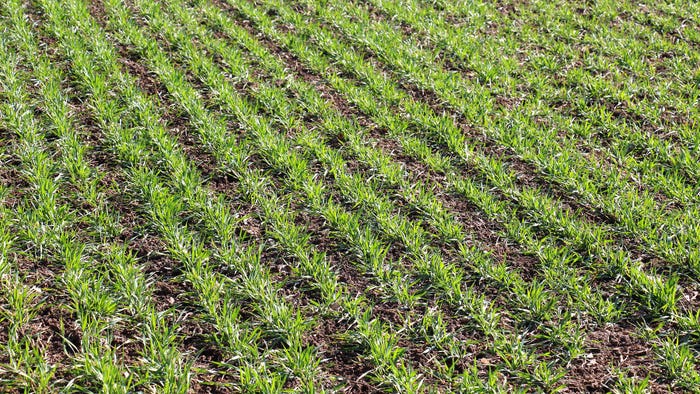
Yet there's also good reason why November was bumping along close to another test of $12, even if yields aren't as strong as the normal trend yield USDA forecast in its May 10 report off 44.5 bpa. Years of very slow corn planting typically see an increase in soybean acreage, which could add up to 3 million more acres when all is said and done. In addition to corn ground switched, some spring wheat acres likely will end up in beans, too. Winter wheat harvest is late this year, which may hold back what otherwise would be a strong double crop program. Moreover, our Farm Futures survey in March found farmers wanting to plant more beans than USDA found, another reason to expect an increase in USDA June 28 acreage report.
As a result, growers shouldn't get too comfortable with the inevitability of November futures rallies. With prices still well below the Revenue Protection base price, there is not a tremendous urgency to heavy sales yet. But growers who didn't follow our earlier recommendations to get 25% of the crop priced at just under $13 should be figuring how much they need to lock in at what level to cover bushels above the RP guarantee.

While the July/November spread moved to new highs Friday, old crop rallies should still bring new along for the ride. July looks like it has potential to test the $14.85 level after surging above its 200-day moving average Friday. Those who still have old crop beans left in in for a thrill ride, with a move by July above $15 giving them a profit from storage if basis holds up.

You can download the complete report using the link below.

Senior Editor Bryce Knorr first joined Farm Futures Magazine in 1987. In addition to analyzing and writing about the commodity markets, he is a former futures introducing broker and is a registered Commodity Trading Adviser. He conducts Farm Futures exclusive surveys on acreage, production and management issues and is one of the analysts regularly contracted by business wire services before major USDA crop reports. Besides the Morning Call on www.FarmFutures.com he writes weekly reviews for corn, soybeans, and wheat that include selling price targets, charts and seasonal trends. His other weekly reviews on basis, energy, fertilizer and financial markets and feature price forecasts for key crop inputs. A journalist with 38 years of experience, he received the Master Writers Award from the American Agricultural Editors Association.



Download file: WSR0051713.pdf
Size: 2697.515 KB (Kilobytes)
Created: 05/17/2013 04:57 PM
Last Modified: 05/17/2013 04:57 PM
Click here to download this file.


Permalink: Click here

Tagged: usda, winter wheat, soybean acreage

Comments
Read comments from others and share your own thoughts.
Please provide the answer to the following question:

 = 
Grain futures are a delivery market. That is, a seller with a short position can deliver the cash commodity against the futures during the delivery period at the end of the contract's life.Though few contracts are delivered, this feature makes grain futures different than commodities that are exclusively cash-settled. Only the short can make delivery; those with a long position cannot demand delivery. The commodity must be registered at an approved delivery facility. For soybeans, most of these are along the Illinois River, where the soybeans are loaded on barges. Basis refers to the comparison of cash prices to futures. Basis is strong because supplies are tight; cash is trading above futures. Anyone who actually owns cash soybeans would earn a higher price by selling them on the cash market, rather than selling futures and delivering. --Bryce
Anonymous on 5/6/2013 5:21:00 AM
pls explain 'basis was very strong and nothing was registered' Some of these terms are used loosely for the newby's to understand. THX
Anonymous on 5/1/2013 12:09:00 AM
Newells Carajo!!
Anonymous on 4/4/2013 8:53:00 AM
looks like China wants all our beans for cheap and when we run out and the prices go up turn to SA and leave livestock producers here in this country scrambling for whats left at the higher prices. whos to blame the Obama Admin ? USDA ? we let China do what ever they want to our markets because we owe them so much money !
Anonymous on 1/21/2013 2:16:00 PM
How can China back out of bean contracts; I can't.
Anonymous on 12/19/2012 2:29:00 PM
Great report,
Anonymous on 12/18/2012 7:44:00 AM
 
Search this site:   

Read More Stories
7 Things You Might Have Missed This Week
Read this storyFarm Bill, organic crop insurance expansion and a recipe for a good 'pie'
Read this story

Traders Might Find Cattle on Feed Report Bearish
Read this storyApril placements of cattle on feed up 15%; May 1 cattle on feed inventory down 3%.
Read this story

Weekly Corn Review
Read this storyLower acreage might stabilize corn market.
Read this story

   
Morning Market Review by Bryce Knorr
Economic Nitrogen Fertilizer for Corn
Afternoon Recap by Paul Burgener
Weekly Corn Review
Traders Might Find Cattle on Feed Report Bearish
Weekly Wheat Review
Weekly Soybean Review
7 Things You Might Have Missed This Week
Security Issues on Korean Peninsula
Soybean Futures Shoot Higher On Tight Old Crop Supply

Top 50 Tags

2008 farm bill 4-H American Farm Bureau Federation American Soybean Association animal health biofuel biofuels BSE checkoff Corn Belt crop insurance department of agriculture Drought dryland Environmental Protection Agency EPA extension service farm bill Farm Bureau farm programs farm progress farm progress show Farm Service Agency farm show farmprogress farmprogress.com farmprogressshow farmprogressshow.com FDA FFA Food and Drug Administration free trade agreement hay expo House Agriculture Committee husker harvest Husker Harvest Days huskerharvestdays.com livestock livestock producers National Cattlemen's Beef Association National Corn Growers Association NCGA New York Farm Show Progress show Senate Agriculture Committee soybean association the farm bill usda winter wheat www.farmprogress.com