Farm Futures
   Search Site:  Search Site Saturday, May 25, 2013 | Bookmark This Site   
Skip Navigation Links
Home
Markets
News
Weather
Farm Futures NOW!

Magazine Online
RSS News
Mobile
Subscribe
Reprints
Register
Login
About Us
Advertise
 
  • Post to Your Wall.
 

Weekly Fertilizer Review

Planting rush doesn't alter fertilizer dynamics.
Compiled by staff 
Published: May 21, 2013

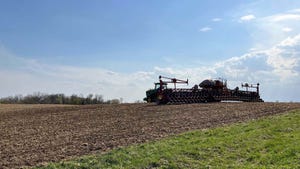
Farmers took giant steps towards getting caught on planting spring crops last week, but the record acreage seeded doesn't appear to have changed the rationale of prices in the fertilizer market. Dealers appear to be still filling orders off existing inventory. That's keeping prices from any significant price gains in most areas but also means producers can't take advantage of lower costs on wholesale markets this spring.

Ammonia appears steady for most producers, after pullbacks in a few retail markets. Prices on the Plains have stabilized with $780 the new normal, but costs to the east in the Corn Belt remain much higher. USDA put the average cost in Iowa steady at $882 this week, $100 or so above the fair value level suggested by current wholesale charges. Ammonia inventories were moving higher this winter, but remained in a long-term downtrend off the high levels that broke prices in the wake of the financial crisis of 2008-2009.

UAN looked for a while like it might become the nitrogen of choice due to late planting, but farmers found time to keep applying ammonia instead. Spot quotes at the Gulf finally reflected weaker summer contacts and dropped sharply to $270, $47.50 below earlier levels. Current fundamentals suggest a price around $355, and that Gulf index price would put the cost even $20 lower, close to where USDA reported the cost in South Carolina this week. Most other retail prices remain higher as inventory bought earlier is worked off. USDA reported the price in Iowa this week still at $382.50 for 28%, with quotes on the Plains still running $360 to $420.

Urea is showing signs of bottoming after a huge drop on international markets over the winter and spring. Prices were mixed for benchmarks: the Black Sea was up a couple bucks to $314.75, but the Gulf slid $3 to $322.50 and quotes out of the Middle East were also weaker. Summer quotes are $5 higher at the Gulf, however, though the Black is still lower than the nearby. Current benchmark prices and fundamentals suggest a retail fair value around $510, in line with quotes on the Plains. USDA put Iowa at $565 and South Carolina $610,

Phosphate prices were steady for DAP at the Gulf at $421, with adequate inventories this spring keeping prices subdued. While fair value based on wholesale costs is around $525, retail prices in Iowa and South Carolina surveyed by USDA this week were around $655, costs on the Plains were down to $590 to $605. MAP in Iowa was at also at $655, with the Plains at $615 to $630.

Potash remains mostly soft, though retail prices were mixed. USDA reported Iowa down $30 to $595, with North Carolina at $612.50 and South Carolina at $605. Updated prices sheets from the Plains were in the $540 to $565 range, with the bottom of the range close to our projected fair value of $530.

Download the complete report using the link below.

Senior Editor Bryce Knorr first joined Farm Futures Magazine in 1987. In addition to analyzing and writing about the commodity markets, he is a former futures introducing broker and is a registered Commodity Trading Advisor. He conducts Farm Futures exclusive surveys on acreage, production and farm management issues and is one of the analysts regularly contracted by business wire services before major USDA crop reports. Besides the Morning Call on www.FarmFutures.com he writes weekly reviews for corn, soybeans, and wheat that include selling price targets, charts and seasonal trends. His other weekly reviews on basis, energy, fertilizer and financial markets and feature price forecasts for key farm crop inputs. A journalist with 38 years of experience, he received the Master Writers Award from the American Agricultural Editors Association.


Download file: WFertR052113.pdf
Size: 398.142 KB (Kilobytes)
Created: 05/21/2013 04:20 PM
Last Modified: 05/21/2013 04:21 PM
Click here to download this file.


Permalink: Click here

Tagged: usda, Corn Belt, farm management

Comments
Read comments from others and share your own thoughts.
Please provide the answer to the following question:

 = 
I would like California Farmer to publish California retail prices. Interested in ton price for the granular 16-20-00 for pasture that comes in the 50 pound bags.
shar on 5/14/2013 4:05:00 PM
Hi Bryce, excellent reports. Have you considered producing such material for south american growers? Cheers
Anonymous on 2/3/2013 5:37:00 AM
It is a good submit, we undoubtedly enjoy this particular fabulous post, remain with it
Chillum Locksmith on 1/29/2013 1:04:00 AM
the Fertilizer prices well be down in 2 months
badr on 1/24/2013 7:46:00 PM
Bryce, I am a converted cotton to corn farmer in S. Ga and no fertilizer sellers store ammonia on site in my area. I have on farm storage and have to buy directly from the port in Tampa. Is there anywhere a daily price for ammonia trade can be found so I know if this is a good deal or not? Thanks for teaching an old dog new tricks..
Anonymous on 11/4/2012 8:06:00 AM
USDA report links: http://www.ams.usda.gov/mnreports/GX_GR210.txt http://www.ams.usda.gov/mnreports/NW_GR210.txt -- Bryce
Anonymous on 8/21/2012 1:07:00 PM
Bryce, throughout this report it states that 'USDA reported' this and that, could you lead me in the direction of where I can find some of their statements? I'm mainly interested in ammonia. Kind regards
Anonymous on 7/11/2012 10:30:00 AM
and about P e K?
Anonymous on 7/1/2012 10:52:00 AM
needs to be a site that post uptodate prices so farmers can get a better deal
Anonymous on 5/7/2012 9:37:00 AM
Sorry to post this explanation so late, but just noticed the question from NY farmer. I provide three types of price information. First are the benchmark prices used internationally, out of the Black Sea, Middle East, Gulf, etc. Some of these prices are from actual trades, others will be for indexes used to settle swaps contacts. Secondly, I look at retail prices paid by farmers. These vary widely by location. Finally, I make projections of what "fair value" is currently for retail prices, based on the international market. In otherwords, if your dealer is buying fertilizer now, say, from the Gulf or out of the Black Sea, what would the normal cost to you be. This fair value price lets you decide if your local market is under or over valued. -- Bryce
Anonymous on 4/27/2012 8:15:00 AM
Dear, the file of the link is one week old. If possible, please, change to the new one, thanks, Nelson
Anonymous on 4/17/2012 8:29:00 AM
New to this site, great info, thank you! Need help reconciling fert price data in today's WFR: Staff notes, "If [ammonia] is imported to the U.S. it could cost $475 a ton, $75 more than the current index price at the Gulf. Normally, this type of cost at the Gulf, $400 a ton, would mean $570 at the farm gate level, while the Black Sea cost would translate to $700 a ton." These two sentences seem wrought with contradiction: Black Sea Am imported to US could cost $475//$75 more than index//this ($400) cost at Gulf would mean $570 at farm gate//BSea cost translates to $700 a ton: so, my questions: i) what does the index measure, raw price of undelivered Ammonia?; ii) difference between Gulf "cost/price (??--seems to be used interchangeably) and farm gate is transportation expense?; and iii) and why would BSea cost translate to $700/ton if differential from Gulf index is $75, should be $75 more than the $570 price at farm gate Staff cites? I know my questions are due to my ignorance, but the data appear contradictory. Many thanks.
nyfarmer on 3/29/2012 11:24:00 AM
I own several business beside the farm i run. I wish i could price everything i sell to the price of corn and beans?!? Can anyone say "price fixing" ? i thought that was illeagal?
Anonymous on 2/10/2012 8:39:00 AM
Sorry to take so long responding. $5 corn translates to $685 ammonia, $525 urea, $665 DAP, $685 potash, given what we know about demand.
Bryce on 10/26/2011 10:05:00 AM
What do your models suggest when using $5 corn and $10 beans?
Anonymous on 9/22/2011 4:23:00 PM
 
Search this site:   

Read More Stories
7 Things You Might Have Missed this Week
Read this storyImpressive planting progress, country of origin labeling and a moveable 'rain' shed
Read this story

Weekly Corn Review
Read this storyRisk management remains name of the game.
Read this story

Weekly Wheat Review
Read this storyWheat futures dodge bullet.
Read this story

   
Morning Market Review by Bryce Knorr
Afternoon Recap by Paul Burgener
Weekly Corn Review
7 Things You Might Have Missed this Week
Weekly Soybean Review
Weekly Wheat Review
Economic Nitrogen Fertilizer for Corn
Super Farm Planning Tool
Sharing the Farm Equipment Load
CRP Decisions Made Simple
Top 50 Tags
2008 farm bill 4-H American Farm Bureau Federation American Soybean Association animal health biofuel biofuels BSE checkoff Corn Belt crop insurance department of agriculture Drought dryland Environmental Protection Agency EPA extension service farm bill Farm Bureau farm programs farm progress farm progress show Farm Service Agency farm show farmprogress farmprogress.com farmprogressshow farmprogressshow.com FFA Food and Drug Administration free trade agreement hay expo House Agriculture Committee husker harvest Husker Harvest Days huskerharvestdays.com livestock livestock producers National Cattlemen's Beef Association National Corn Growers Association NCBA NCGA New York Farm Show Progress show Senate Agriculture Committee soybean association the farm bill usda winter wheat www.farmprogress.com