Farm Futures
   Search Site:  Search Site Thursday, May 23, 2013 | Bookmark This Site   
Skip Navigation Links
Home
Markets
News
Weather
Farm Futures NOW!

Magazine Online
RSS News
Mobile
Subscribe
Reprints
Register
Login
About Us
Advertise
 
  • Post to Your Wall.
 

Weekly Corn Review

Lower acreage might stabilize corn market.
Bryce Knorr 
Published: May 17, 2013


Corn remains a tale of two markets, old crop and new. That should change a bit next month, when questions about acreage and yield take center stage for 2013 crops.

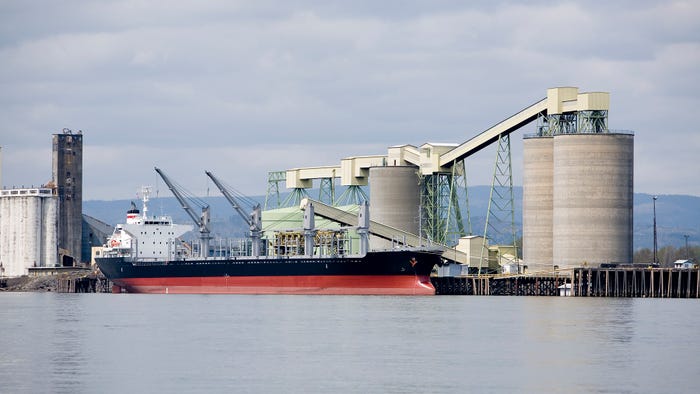
Until then, tight old crop stocks will drive the debate, at least for July futures. Ethanol margins remain strong, helping support domestic demand, which should also get a lift from more cattle in feedlots. Even exports firmed up recently, as grain began flowing down the river in a timely fashion.

Look for USDA's June grain stocks report to increase the market's case of the jitters, because these inventories have caused a lot of volatility in the last three years. Growing season weather will also be in the spotlight, with this week's heat a reminder of how fast the outlook can turn. Pollination will be a little later than usual this summer due to the planting delays, leaving yet another wild card for traders to mull: acreage.

Lower acreage might stabilize corn market.

Lower acreage might stabilize corn market.
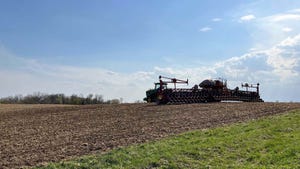
While there's no statistical correlation between mid-May planting progress and final yields, there is a connection with acreage. The slow start to the year could result in final planted acreage that's 2% to 4% or more below USDA's March intentions. Even at normal yields that's enough to chop up to 600 million bushels off total production. Ending stocks still wouldn't be extremely tight, but the decline would intensify any reaction to weather, as traders watch weekly crop ratings closely.

I've included the lower acreage scenario in this week's price models. They suggest a potential selling range of $5.75 to $6.50 for December futures, well above the normal yield assumption, which is $5 to $5.75.

With December futures beginning to trade in the bottom half of that range, there's nothing to do now but wait to see if the April low at $5.17 holds. The seasonal trend for December futures certainly isn't bullish in the normal year pattern after mid-May, with weakness into the end of the month and early June. That would be the time to make lemonade out of lemons, by buying a few out of the money new crop calls if additional upside protection is needed to supplement the Revenue Protection crop insurance guarantee. Short-dated September new crop calls or September calls for under a dime would be enough.

Those who really need more protection should consider selling the July 2014 rather than the December, as the market's built some carry in already as a cushion. We previously recommended pricing 30% of production at an average price of $5.96, using Revenue Protection as downside coverage on the rest. Selling July 2014 calls and buying December puts would be another way to go. Of course, anything with futures assumes the ability to suffer margin calls, both in temperament and cash flow.

For more on this, download my weekly Corn Report using the link below.

Senior Editor Bryce Knorr first joined Farm Futures Magazine in 1987. In addition to analyzing and writing about the commodity markets, he is a former futures introducing broker and is a registered Commodity Trading Adviser. He conducts Farm Futures exclusive surveys on acreage, production and management issues and is one of the analysts regularly contracted by business wire services before major USDA crop reports. Besides the Morning Call on www.FarmFutures.com he writes weekly reviews for corn, soybeans, and wheat that include selling price targets, charts and seasonal trends. His other weekly reviews on basis, energy, fertilizer and financial markets and feature price forecasts for key crop inputs. A journalist with 38 years of experience, he received the Master Writers Award from the American Agricultural Editors Association.



Download file: WCR051713.pdf
Size: 3862.196 KB (Kilobytes)
Created: 05/17/2013 04:52 PM
Last Modified: 05/17/2013 04:52 PM
Click here to download this file.


Permalink: Click here

Tagged: usda, crop insurance

Comments
Read comments from others and share your own thoughts.
Please provide the answer to the following question:

 = 
We need to spend less money on production and more money on storage bins.
Anonymous on 5/13/2013 8:17:00 AM
Yes, there was a week of bad data. Unfortunately, it's a fixed chart and I can't correct it. --Bryce
Anonymous on 5/6/2013 8:32:00 AM
Bryce, On the world corn prices charts in the Weekly Corn Review, is the Ukrainian Corn a bad data point?
Anonymous on 4/16/2013 11:37:00 AM
you farmers should have farmed in the in between war years. Hilary Clinton made 2.4 million in four days shorting the fed cattle market, with 50 cattle contracts in the dairy bonanza days of 1980. Guess who lost!!! the family farmer cattle feeders,in there nievetie. thene the tit for tat trading war of pre NAFTA CAFTA RAFTA AND every other free trade agreement of slick Willy C . thanks to Newt Ginrich and Monica Lewinski fame. So you thhin usda is bad at reporting now! wait until Martha Stewert get a hold of you, or do I have to draw you a picture!!!!!
Anonymous on 4/10/2013 11:26:00 PM
People don't always realize it, but we started rationing demand last June/July. We imported wheat. We imported milo. We imported corn. We closed 32 ethanol plants entirely. We slowed down many of the other plants. We fed a higher percentage of DDG's in feed rations. There is more corn!
Anonymous on 4/4/2013 9:46:00 AM
Brock has either shorted the market or is an idiot.
Anonymous on 3/26/2013 9:32:00 AM
Brock was right. It looks like it is over for corn. Harvest could be as low as $4.50 in the country. Brokers around here are taking as high as $2.50 basis.
Anonymous on 3/8/2013 9:32:00 AM
we need more great comments like this. neal weintraub
Anonymous on 1/20/2013 4:22:00 PM
Ddd
Anonymous on 1/19/2013 1:57:00 AM
Corn and soybeans are going to crash due to South American production. williamwandrews@bellsouth.net
Anonymous on 12/2/2012 8:59:00 AM
An organized Farmers Strike would work just fine...
Anonymous on 11/15/2012 10:52:00 AM
It all boils down to the USDA trying to keep food prices cheap especially in an election year. I am a grain farmer and a cattle producer and the mysterious pink slime case that hit the market right when beef was at it's high was not a coincidence. We had to sell about 300 feeder calves that week and it costs us over $100/hd from what we got just 3 weeks before. I don't know who is going to take the chance to make a dollar farming if they keep take tampering with the markets.
Anonymous on 10/22/2012 7:55:00 AM
I agree with the hilfarmer also,until the usda can control the weather they should keep there thought to themselves. The farmer himself does not know for sure what he is going do to next year. A lot of my friends has been hurt from these false reports. farmer
Anonymous on 10/20/2012 7:49:00 AM
Hillfarmer is right! The USDA has no business giving wrong acreage reports and wrong yield projections. Those "mistakes" cause farmers to sell too low and magnify the risk they encounter with drought. Once again, the market traded early on this erroneous information, farmers were stuck with the market prices throughout the year and now those prices have increased the losses that farmers will experience. I would argue that the USDA did as much damage as the drought; maybe more, since it scared farmers into forward contracting bushels and taking on production risk they might not normally have taken on. Now, having damaged the farmers, USDA rides in on a white horse and gives farmers below-interest loans so they can double down and pay off their contracts with loaned cash. USDA should stick to administering school lunches and stay out of the ag marketing projection business. What is their motivation for ruining markets for producers?
Anonymous on 7/23/2012 8:35:00 AM
Sorry to take so long responding. The selling ranges are what the model says is the range form one to two standard deviations above the average -- which covers 95% of the expected price range given all the data we currently know. This range is essentially the "top one-third" of the price range. This is a moving target, and changes from week to week along with the data. I plan to provide a better explanation on a footnote to the tables -- it's on the to do list. -- Bryce
Anonymous on 3/13/2012 6:51:00 PM
How should "This Week's Selling Range" be interpreted on the balance sheets?
Anonymous on 2/21/2012 8:39:00 AM
I agree corn prices have been bouncing all over the place and making it hard for us farmers to know when to cash in....
deereman 47970 on 8/26/2011 9:35:00 AM

Why does the government give wrong acreage reports in the first place?  With the acres being certified with FSA and crop insurance acreage reports and computer technology the government knows how many acres are planted by the middle of July.  There is no excuse for changes in planted acres in the following months.




Hillfarmer on 10/14/2009 10:34:00 PM
 
Search this site:   

Read More Stories
Sugar Policy Dominates Farm Bill Discussion
Read this storySenators entertain amendments to eliminate sugar program, establish SNAP block grants
Read this story

EPA Proposes Wide Range of Changes to RFS
Read this storyEnvironmental Protection Agency proposes modification to RFS to include new pathway for isobutanol, clarify eligibility for ethanol from crop residues
Read this story

Senate Judiciary Committee Passes Immigration Reform Bill
Read this storyAfter five markup sessions and consideration of more than 200 amendments, the Senate Judiciary Committee prepares immigration bill for floor time
Read this story

   
EPA Proposes Wide Range of Changes to RFS
Afternoon Recap by Paul Burgener
Morning Market Review by Bryce Knorr
Sugar Policy Dominates Farm Bill Discussion
Weekly Fertilizer Review
Economic Nitrogen Fertilizer for Corn
Senate Judiciary Committee Passes Immigration Reform Bill
Super Farm Planning Tool
Custom Rates Change with Fuel Cost
Sharing the Farm Equipment Load
Top 50 Tags
2008 farm bill 4-H American Farm Bureau Federation American Soybean Association animal health biofuel biofuels BSE checkoff Corn Belt crop insurance department of agriculture Drought dryland Environmental Protection Agency EPA extension service farm bill Farm Bureau farm programs farm progress farm progress show Farm Service Agency farm show farmprogress farmprogress.com farmprogressshow farmprogressshow.com FDA FFA Food and Drug Administration free trade agreement hay expo House Agriculture Committee husker harvest Husker Harvest Days huskerharvestdays.com livestock livestock producers National Cattlemen's Beef Association National Corn Growers Association NCGA New York Farm Show Progress show Senate Agriculture Committee soybean association the farm bill usda winter wheat www.farmprogress.com