Farm Futures
   Search Site:  Search Site Thursday, May 23, 2013 | Bookmark This Site   
Skip Navigation Links
Home
Markets
News
Weather
Farm Futures NOW!

Magazine Online
RSS News
Mobile
Subscribe
Reprints
Register
Login
About Us
Advertise
 
  • Post to Your Wall.
 

Use Distillers Grains for Livestock Rations

DDGs make ideal protein and fat source, but you need to request a nutrient profile when evaluating potential value of product.
Compiled by staff 
Published: Aug 16, 2007

The rapid expansion of the ethanol industry has greatly increased the volume of distillers grains available for livestock feed. Nutritionists suggest feeding distillers grains for high protein and fat values, but keep a close eye on sulfur and phosphorous content in the grain.

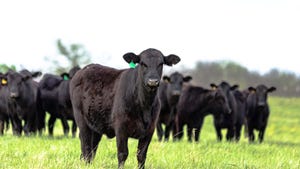
"The industry is reporting that 75% to 80% of the distiller coproducts are fed to dairy and beef cattle," says Steve Soderlund, beef nutrition manager for Pioneer Hi-Bred International. "When evaluating the potential value of these products, make sure you request a nutrient profile from the ethanol plant. Consider how these products complement your existing feeding program."

He says one of the biggest factors in determining the nutrient content of the distiller coproducts is the grain source used by the ethanol plant. "In comparison to corn, if the plant is using sorghum as a primary grain source, expect to see higher protein levels, but a lower fat level," says Soderlund.

Feeding distillers grains

University beef cattle feeding trials have found the energy values of distillers grain can be as much as 9% better than corn. This is due primarily to the fat content in the product which is 2.25 to 2.5 times the caloric density of starch. Most distillers grains contain between 10% to 12% fat and 24% to 30% protein.
"Including distillers grains at 15% to 20% of the dry matter in a beef finishing ration generally will meet the protein requirements and contribute to the energy needs of the cattle," he says. "In forage-based diets for beef cows, distillers grains can be used as a source of supplemental protein and energy. The amount fed depends on the desired performance and nutrient content of the forage."

Be aware of two potential mineral concerns, sulfur and phosphorus, when feeding distillers grains to feedlot cattle. Keep sulfur content to less than 0.4% of the dry matter intake from all sources, including water. Polioencephlemalacia - a disease affecting the central nervous system of cattle - can result from elevated sulfur levels. In addition, phosphorous levels should be monitored.

Phosphorous content typically will be three times higher in distillers grains than in corn grain. "Unless very high levels of calcium are supplemented, an unfavorable calcium-to-phosphorous ratio may develop," says Soderlund. "Urinary calculi - water belly - can develop in feedlot steers under these conditions. Keep the calcium-to-phosphorous ratio between 1-1 to 1.5-1." Distillers grains will be used primarily as a protein and fat source in dairy rations, which generally limits its inclusion rate to less than 10% of the diet. However, university tests have shown that distillers grains can be fed at up to 20% of the ration when feeding higher forage levels. "Dairy producers need to pay close attention to the amount of effective fiber in the diet," he notes. "Even though distillers grains contain a relatively high level of neutral detergent fiber, the fiber is very fine and will not maintain good rumination."

Traditional ethanol coproducts

Several different distiller feed products are produced by the ethanol industry. The highest-volume product is distillers grains, which primarily contains unfermented grain residues; protein, fiber and fat. The remaining fraction is called thin stillage which contains yeast cells, soluble nutrients and very small corn particles. "Most large distilleries have the capability to dry their distillers grains - DDG," says Soderlund. "The thin stillage is concentrated to a molasses-like consistency to form condensed distillers solubles. The CDS product can be sold directly to liquid feed manufacturers or dried and placed back on the DDG to produce distillers grains plus soluble."

While the majority of distillers grain produced in the upper Midwest is sold as DDGS, a high percentage produced in the High Plains is fed as wet distillers grain locally - reducing energy costs associated with drying. WDG needs to be fed within 4 to 5 days before warm weather causes significant spoilage.

Future coproducts

Corn breeders are developing hybrids with genetics that not only yield higher ethanol but also produce coproducts with higher nutritional value. Strategies to improve the amino acid profile, lower fiber content, lower phosphorus content and improve fatty acid profiles are all being explored.


Permalink: Click here

Comments
Read comments from others and share your own thoughts.
Please provide the answer to the following question:

 = 
 
Search this site:   

Read More Stories
Sugar Policy Dominates Farm Bill Discussion
Read this storySenators entertain amendments to eliminate sugar program, establish SNAP block grants
Read this story

EPA Proposes Wide Range of Changes to RFS
Read this storyEnvironmental Protection Agency proposes modification to RFS to include new pathway for isobutanol, clarify eligibility for ethanol from crop residues
Read this story

Senate Judiciary Committee Passes Immigration Reform Bill
Read this storyAfter five markup sessions and consideration of more than 200 amendments, the Senate Judiciary Committee prepares immigration bill for floor time

Read this story

   
EPA Proposes Wide Range of Changes to RFS

Morning Market Review by Bryce Knorr
Afternoon Recap by Paul Burgener
Sugar Policy Dominates Farm Bill Discussion
Weekly Fertilizer Review
Economic Nitrogen Fertilizer for Corn
Senate Judiciary Committee Passes Immigration Reform Bill
Super Farm Planning Tool
Senate Begins Consideration of 2013 Farm Bill
Custom Rates Change with Fuel Cost
Top 50 Tags
2008 farm bill 4-H American Farm Bureau Federation American Soybean Association animal health biofuel biofuels BSE checkoff Corn Belt crop insurance department of agriculture Drought dryland Environmental Protection Agency EPA extension service farm bill Farm Bureau farm programs farm progress farm progress show Farm Service Agency farm show farmprogress farmprogress.com farmprogressshow farmprogressshow.com FDA FFA Food and Drug Administration free trade agreement hay expo House Agriculture Committee husker harvest Husker Harvest Days huskerharvestdays.com livestock livestock producers National Cattlemen's Beef Association National Corn Growers Association NCGA New York Farm Show Progress show Senate Agriculture Committee soybean association the farm bill usda winter wheat www.farmprogress.com