Farm Futures
   Search Site:  Search Site Saturday, May 25, 2013 | Bookmark This Site   
Skip Navigation Links
Home
Markets
News
Weather
Farm Futures NOW!

Magazine Online
RSS News
Mobile
Subscribe
Reprints
Register
Login
About Us
Advertise
 
  • Post to Your Wall.
 

Researchers Investigate Marginal Land for Biomass

Non-food biomass production coupled with processing plants could create sustainable infrastructure for fuel conversion.
Compiled by staff 
Published: Aug 15, 2012

This summer's drought has "stirred the pot" in the fuel vs. food debate, but researchers at the University of Missouri Center for Agroforestry are collaborating with the U.S. Dept. of Energy to study how second generation biofuels—those from non-fuel crops grown on marginal land—could become profitable and sustainable.

Despite finite supplies of fossil fuels, Shibu Jose, director of the Center for Agroforestry at the University of Missouri and H.E. Garrett Endowed Professor at the MU College of Agriculture, Food and Natural Resources says creating a vibrant biofuel industry is a "chicken-or-the-egg" problem.

Shibu Jose, director of the Center for Agroforestry at the University of Missouri, stands in a test plot of switchgrass.

Shibu Jose, director of the Center for Agroforestry at the University of Missouri, stands in a test plot of switchgrass.
Farmers don't want to invest in these biofuel crops until they know there will be buyers willing to pay a good price for them, he says. "And industrial players like refineries and producers of advanced liquid fuels would like to see sustainable production of biomass crops before they set up shop, which would take millions of dollars of investment."

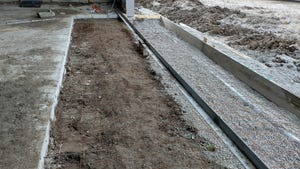
To find solutions to both cropping and processing issues, MU researchers are testing four species of biofuel crops in land that is not or can't be used for other production. In the flood-prone fields along the Missouri and Mississippi rivers, the crops are grown in huge trenches that will be flooded to simulate conditions.

The fields include 15 different varieties of each of the four candidate crops: willow, switchgrass, cottonwood and high-biomass sorghum. The researchers will compare how well they grow in different types of soil and under different amounts and duration of flood stress.

The results will reveal which varieties are likely to perform best in the floodplains. This knowledge will guide breeding programs to create new, improved varieties of biomass crops.


Permalink: Click here

Tagged: biofuel, biomass crops, biofuels, biofuel crops, Drought

Comments
Read comments from others and share your own thoughts.
Please provide the answer to the following question:

 = 
much better than ethanol from corn and could provide small farms with much needed income. A crop with the added benefit of providing food for deer, turkey, etc. would add value as well. I would be interested in such a program...it just needs to be put into motion and field tested. Grant money for such a test is needed. There are many "laboratories" like mine out in rural Mo. who may need seed money to get started (ie: equipment) and a certain market to sell the product. If it works, long term contracts might be in order to give the farmer a sense of certainty.
Anonymous on 9/9/2012 3:57:00 PM
The answer to our fuel supply problems is to develop more fuel efficient vehicles. On my morning commute into the office, I would estimate the average fuel economy of the vehicles in traffic with me is under 20 mpg with the majority of people driving trucks or SUVs as commuter vehicles. I traded in my Jeep 5 years ago to get 38 mpg in a new fuel efficient car and now get 50 mpg in my latest vehicle. My Jeep got 17 mpg. I am getting almost 3 times the fuel economy now. Does anyone care that we have had thousands of people die to make the area that produces most of the world’s oil secure? Planting biomass on marginal land is not the answer. Conservation is.
Sustainable farmer on 8/16/2012 6:32:00 AM
Has using all the tanoaks dying from sudden oak death, and logging and mill slash, been looked at for biomass?
s on 8/15/2012 12:58:00 PM
 
Search this site:   

Read More Stories
7 Things You Might Have Missed this Week
Read this storyImpressive planting progress, country of origin labeling and a moveable 'rain' shed
Read this story

CBO Releases Cost Estimate for House Ag Committee-Passed Farm Bill
Read this storyCongressional Budget Office estimates Farm Bill will fall short of projected $40B in deficit reduction
Read this story

Senate Farm Bill Debate Marches On
Read this storySenators tackle four amendments on day four of Farm Bill debate; wrap up discussion until June 3
Read this story

   
Morning Market Review by Bryce Knorr
Afternoon Recap by Paul Burgener
Weekly Corn Review
7 Things You Might Have Missed this Week
Weekly Soybean Review
Weekly Wheat Review
Economic Nitrogen Fertilizer for Corn
CRP Decisions Made Simple
Sharing the Farm Equipment Load
Super Farm Planning Tool
Top 50 Tags
2008 farm bill 4-H American Farm Bureau Federation American Soybean Association animal health biofuel biofuels BSE checkoff Corn Belt crop insurance department of agriculture Drought dryland Environmental Protection Agency EPA extension service farm bill Farm Bureau farm programs farm progress farm progress show Farm Service Agency farm show farmprogress farmprogress.com farmprogressshow farmprogressshow.com FFA Food and Drug Administration free trade agreement hay expo House Agriculture Committee husker harvest Husker Harvest Days huskerharvestdays.com livestock livestock producers National Cattlemen's Beef Association National Corn Growers Association NCBA NCGA New York Farm Show Progress show Senate Agriculture Committee soybean association the farm bill usda winter wheat www.farmprogress.com