Farm Futures
   Search Site:  Search Site Wednesday, May 22, 2013 | Bookmark This Site   
Skip Navigation Links
Home
Markets
News
Weather
Farm Futures NOW!

Magazine Online
RSS News
Mobile
Subscribe
Reprints
Register
Login
About Us
Advertise
 
  • Post to Your Wall.
 

Group Fights Food Labeling Confusion

CommonGround urges consumers to understand labels before buying
Compiled by staff 
Published: Jan 28, 2013

CommonGround, a United Soybean Association and National Corn Growers Association-sponsored movement to increase communication among women in cities and on farms, Thursday released a quick reference list of labels consumers should make an effort to understand.

New Year's resolutions often spur consumers to select healthier options for their families, CommonGround says. New labels and buzzwords often make the trip to the market even more daunting.

The group reminds consumers that many of the labels, such as "grass-fed" and "organic," only refer to how the animal or product was raised or grown, not to the nutritional content.

"We are truly blessed to have so many food choices available to us at the grocery store," said Missouri farmer and CommonGround volunteer Renee Fordyce. "With so many food options available, I want moms to feel good about their food choices and know that farmers share many of the same values and priorities when it comes to feeding our own families."

CommonGround urges consumers to understand labels before buying

CommonGround urges consumers to understand labels before buying
CommonGround's list of commonly found labels that may cause confusion includes:

Organic - Organic meat, poultry, eggs and dairy products come from animals that are given no antibiotics or growth hormones. To be labeled "organic," a government-approved certifier must inspect the farm where the food is grown to make sure the farmer meets all the rules necessary to comply with U.S. Department of Agriculture organic standards.

Free-range - This label indicates that the flock was provided shelter in a building, room or area with unlimited access to food, fresh water and continuous access to the outdoors during their production cycle. The outdoor area may or may not be fenced and/or covered with netting-like material. This label is regulated by the USDA.

Cage-Free - This label indicates that the flock was able to freely roam a building, room or enclosed area with unlimited access to food and fresh water during their production cycle.

Natural - As required by USDA, meat, poultry and egg products labeled as "natural" must be minimally processed and contain no artificial ingredients. However, the natural label does not include any standards regarding farm practices and only applies to processing of meat and egg products. There are no standards or regulations for the labeling of natural food products if they do not contain meat or eggs.

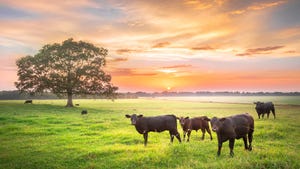
Grass-fed - Grass-fed animals receive a majority of their nutrients from grass throughout their lives, while organic animals' pasture diet may be supplemented with grain. Also USDA-regulated, the grass-fed label does not limit the use of antibiotics, hormones or pesticides. Meat products may be labeled as "grass-fed organic."

Pasture-raised - Due to the number of variables involved in pasture-raised agricultural systems, the USDA has not developed a labeling policy for pasture-raised products.

Humane - Multiple labeling programs make claims that animals were treated humanely during the production cycle, but the verification of these claims varies widely. These labeling programs are not regulated under a single USDA definition.

Source: USDA

All of the food labels listed above refer to how food is raised, not to its nutritional value, CommonGround notes.

For more information, visit  www.findourcommonground.com


Permalink: Click here

Tagged: usda, department of agriculture, National Corn Growers Association, soybean association, the farmer

Comments
Read comments from others and share your own thoughts.
Please provide the answer to the following question:

 = 
I think the big item left out regarding organic is the organic feed and other high cost in livestock organic production. The no hormones or antibiotics part is easy. With sheep especially, parasite control without commercial dewormer is very difficult in some areas. Sheep can die from anemia with heavy internal parasite loads, in addition to just doing poorly. I am not trying to go organic with sheep unless I can use effective dewormers.
shar on 1/28/2013 10:23:00 AM
 
Search this site:   

Read More Stories
Sugar Policy, SNAP Key Points of Farm Bill Debate Day Two
Read this storySenators debated sugar policy and voted on controversial SNAP amendments Tuesday
Read this story

U.S. Geological Survey Finds Groundwater Levels Shrinking
Read this storyLatest study on long-term aquifer water levels finds accelerating draw-down
Read this story

Weekly Fertilizer Review
Read this storyPlanting rush doesn't alter fertilizer dynamics.
Read this story

   
Morning Market Review by Bryce Knorr
Afternoon Recap by Paul Burgener
Sugar Policy, SNAP Key Points of Farm Bill Debate Day Two
Weekly Fertilizer Review
U.S. Geological Survey Finds Groundwater Levels Shrinking
Livestock Call by John Otte
Senate Begins Consideration of 2013 Farm Bill
The Buzz: Late Planting Still An Issue
Weekly Soybean Review
Economic Nitrogen Fertilizer for Corn
Top 50 Tags
2008 farm bill 4-H American Farm Bureau Federation American Soybean Association animal health biofuel biofuels BSE checkoff Corn Belt crop insurance department of agriculture Drought dryland Environmental Protection Agency EPA extension service farm bill Farm Bureau farm programs farm progress farm progress show Farm Service Agency farm show farmprogress farmprogress.com farmprogressshow farmprogressshow.com FDA FFA Food and Drug Administration free trade agreement hay expo House Agriculture Committee husker harvest Husker Harvest Days huskerharvestdays.com livestock livestock producers National Cattlemen's Beef Association National Corn Growers Association NCGA New York Farm Show Progress show Senate Agriculture Committee soybean association the farm bill usda winter wheat www.farmprogress.com