Farm Futures
   Search Site:  Search Site Friday, May 24, 2013 | Bookmark This Site   
Skip Navigation Links
Home
Markets
News
Weather
Farm Futures NOW!

Magazine Online
RSS News
Mobile
Subscribe
Reprints
Register
Login
About Us
Advertise
 
  • Post to Your Wall.
 

Farm Bill Kicked to Senate by Ag Committee

With its $23 billion in promised savings, the farm bill now heads to the Senate for full consideration.
Compiled by staff 
Published: Apr 26, 2012

It was obvious from the start that the 2012 Farm Bill was - on the whole - getting bipartisan support - and when the dust settled after a day of markup - the measure passed by a 12 to 4 voice vote. And for those against, it was more a matter of geography than party that made the difference.

The Southern contingent including Sen. Saxby Chambliss, R-Ga., led the charge on key changes to this farm bill including payment limits and the end of direct payments, but all of the southern Senators on hand were against the changes including Sen. Mitch McConnell, R-Ky; Sen. John Boozman, R-Ark.; Sen. Thad Cochran, R-Miss. The final nay vote came from Sen. Kirstan Gillibrand, D-N.Y., who disagreed with changes to the nutrition title cuts in the program.

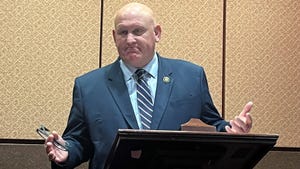
NEXT STEP, THE SENATE FLOOR: The Senate Ag Committee has released its draft of the 2012 Farm Bill to the full Senate.

NEXT STEP, THE SENATE FLOOR: The Senate Ag Committee has released its draft of the 2012 Farm Bill to the full Senate.
At one point Chambliss pointed out that given the payment limits proposed - $50,000 - a peanut grower wouldn't qualify, and he objected to the move that in effect classifies all crops as if they are the same.

In a statement released by the Senate Ag Committee right after the vote, committee made the following statement: The bill reforms food and agricultural policy by eliminating direct payments and emphasizing the need to strengthen risk management tools for farmers, saving billions of dollars. Overall, the Agriculture Reform, Food and Jobs Act of 2012 will reduce the deficit by $23 billion dollars by eliminating unnecessary subsidies, consolidating programs to end duplication, and cracking down on food assistance abuse. These reforms allow for the strengthening of key initiatives that help farmers and small businesses reach new markets and create American jobs. The measure will now go to the full Senate for consideration.

In the statement, Stabenow says: " The Agriculture Reform, Food and Jobs Act of 2012 will save taxpayers billions of dollars while promising a safe and healthy national food supply. By eliminating duplication, and streamlining and consolidating programs, we were able to continue investing in initiatives that help farmers and small businesses create jobs. This bill proves that by working across party lines, we can save taxpayer money and create smart, cost-effective policies that lay the foundation for a stronger, more prosperous economy.  I am proud that once again the Agriculture Committee was able to work together in a bipartisan way to complete major reforms that save money and grow our economy."

Robert Stallman, president, American Farm Bureau Federation, released a statement after the bill passed noting the organization was encouraged that the bipartisan bill was sent on to the Senate for full consideration. "Chairwoman Stabenow and Ranking Member Roberts deserve praise for structuring this legislation with crucial risk management tools for farmers and doing so in a fiscally responsible manner during one of the toughest budget climates our nation has ever faced. The bill also provides a firm foundation for continued cooperative, incentive-based conservation efforts."

However, Stallman also says the organization will "continue to seek improvements in several areas as this bill moves forward, particularly in how to provide more equity among commodities, and ways to better address deep, catastrophic losses."

To view a copy of the Agriculture Reform, Food and Jobs Act of 2012, including the amendments that were accepted by the Committee, please visit the Senate Agriculture Committee website at www.ag.senate.gov/issues/farm-bill. A section-by-section summary of the bill is also available as well as an archived webcast of the markup procedures.  A short summary of the Agriculture Reform, Food and Jobs Act is below. provided by the Senate Ag Committee:


The Agriculture Reform, Food and Jobs Act of 2012 reforms farm policy, consolidates and streamlines programs, and will reduce the deficit by $23 billion. This bill saves taxpayers money while strengthening initiatives that help farmers, ranchers and small business owners create American jobs. The bill:

Eliminates Direct Payments while Strengthening Risk Management

Farmers face unique risks unlike other businesses. Weather and market conditions outside a producer’s control can have devastating effects. A risk management system that helps producers stay in business through a few bad seasons ensures that Americans always have access to a safe and plentiful food supply. The proposal: 

  • Eliminates direct payments. Farmers will no longer be paid for crops they are not growing, will not be paid for acres that are not actually planted, and will not receive support absent a drop in price or yields.

  • Consolidates two remaining farm programs into one, and will give farmers the ability to tailor risk management coverage—meaning better protection against real risks beyond a farmer’s control.


  • Strengthens crop insurance and expands access so farmers are not wiped out by a few days of bad weather.

Consolidates and Streamlines Programs

By eliminating duplicative programs, funds are concentrated in the areas in which they will have the greatest impact, making them work better for producers. 

  • By ending duplication and consolidating programs, the bill eliminates dozens of programs under the Agriculture Committee’s jurisdiction.
    • For example, the bill consolidates 23 existing conservation programs into 13 programs, while maintaining the existing tools farmers and landowners need to protect and conserve land, water and wildlife. 

Improves Program Integrity and Accountability

At a time when many out-of-work Americans are in need for the first time in their lives, it is critical that every taxpayer dollar be spent responsibly and serves those truly struggling. By closing loopholes, tightening standards, and requiring greater transparency, the proposal increases efficiency and improves effectiveness. 

  • Increases accountability in the Supplemental Nutrition Assistance Program (SNAP) by:
    • Stopping lottery winners from continuing to receive assistance.
    • Ending misuse by college students.
    • Cracking down on retailers and recipients engaged in benefit trafficking.
    • Increasing requirements to prevent liquor and tobacco stores from becoming retailers.
    • Eliminating gaps in standards that result in overpayment of benefits.
    • The proposal maintains benefits for families in need.

Grows America’s Agricultural Economy

The proposal increases efficiency and accountability, saving tens of billions of dollars overall, while strengthening agricultural jobs initiatives by:

  • Expanding export opportunities and helping farmers develop new markets for their goods.
  • Investing in research to help commercialize new agricultural innovations.
  • Growing bio-based manufacturing (businesses producing goods in America from raw agricultural products grown in America) by allowing bio-manufacturers to participate in existing U.S. Department of Agriculture loan programs, expanding the BioPreferred labeling initiative, and strengthening a procurement preference so the U.S. government will select bio-based products when purchasing needed goods.
  • Spurring advancements in bio-energy production, supporting advanced biomass energy production such as cellulosic ethanol and pellets from woody biomass for power.
  • Helping family farmers sell locally by increasing support for farmers’ markets and spurring the creation of food hubs to connect farmers to schools and other community-based consumers.
  • Extending rural development initiatives to help rural communities upgrade infrastructure and create an environment for small businesses to grow.


Permalink: Click here

Tagged: farm bill, Senate Ag Committee, farm programs, Farm Bureau, department of agriculture

Comments
Read comments from others and share your own thoughts.
Please provide the answer to the following question:

 = 
wonder what the underlined is really about?
Anonymous on 4/26/2012 9:54:00 PM
 
Search this site:   

Read More Stories
Senate Farm Bill Debate Marches On
Read this storySenators tackle four amendments on day four of Farm Bill debate; wrap up discussion until June 3
Read this story

Storms, Rains Lend A Little Drought Relief
Read this storyRains across the Plains provide a bit of drought relief while stalling planting progress in the Midwest moving eastward.
Read this story

Sugar Policy Dominates Farm Bill Discussion
Read this storySenators entertain amendments to eliminate sugar program, establish SNAP block grants
Read this story

   
Morning Market Review by Bryce Knorr
Afternoon Recap by Paul Burgener
NASS Preps to Take Stock of Crops, Livestock
USDA Retains Country of Origin Labeling Requirement
Senate Farm Bill Debate Marches On
Economic Nitrogen Fertilizer for Corn
Weekly Corn Review
Sharing the Farm Equipment Load
Make Smarter Land Investments
Super Farm Planning Tool
Top 50 Tags
2008 farm bill 4-H American Farm Bureau Federation American Soybean Association animal health biofuel biofuels BSE checkoff Corn Belt crop insurance department of agriculture Drought dryland Environmental Protection Agency EPA extension service farm bill Farm Bureau farm programs farm progress farm progress show Farm Service Agency farm show farmprogress farmprogress.com farmprogressshow farmprogressshow.com FFA Food and Drug Administration free trade agreement hay expo House Agriculture Committee husker harvest Husker Harvest Days huskerharvestdays.com livestock livestock producers National Cattlemen's Beef Association National Corn Growers Association NCBA NCGA New York Farm Show Progress show Senate Agriculture Committee soybean association the farm bill usda winter wheat www.farmprogress.com