Farm Futures
   Search Site:  Search Site Wednesday, June 19, 2013 | Bookmark This Site   
Skip Navigation Links
Home
Markets
News
Weather
Farm Futures NOW!

Magazine Online
RSS News
Mobile
Subscribe
Reprints
Register
Login
About Us
Advertise
 
  • Post to Your Wall.
 

Expectations Low for WTO Breakthrough

In this bustling icon of free trade, the WTO remains locked in a stalemate over market access and farm program cuts.
Mike Wilson 
Published: Dec 16, 2005

HONG KONG- The WTO's Doha Development round, so named for its emphasis on helping developing nations build their economies through trade opportunities, has reached an impasse with the European Union taking the lion's share of blame.

Poor nations say that as a part of a global free-trade deal, the EU, U.S. and other rich nations must cut their farm subsidies and tariffs that block developing countries' access to those lucrative markets.

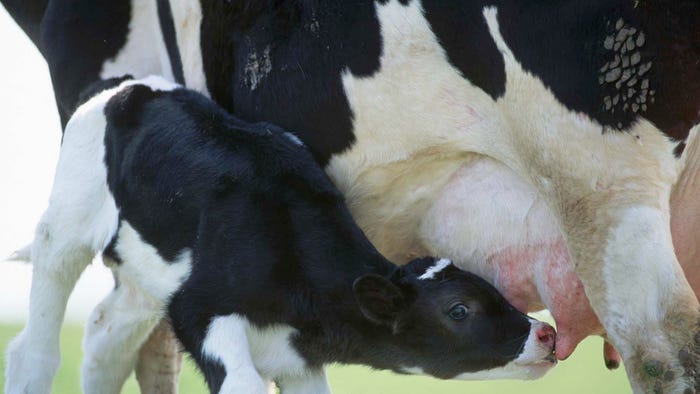
Chilean foreign minister Ignacio Walker blasted the EU's farm subsidy program, which critics say totals up to $110 billion a year. Walker said that works out to about $2 a day for each cow.

"So many poor people wish they would be at least as well off as an EU cow," Walker says.

European Union Trade Commissioner Peter Mandelson maintains he won't budge on agriculture unless the other major economies give ground on industrial market access.
But the U.S. and other countries won't move on industrials until the EU gives ground on agriculture, leaving talks stalemated until one player blinks.

"The EU has presented a complete agricultural package," says Elena Espinosa, Spain's agricultural minister. "What did the others present? Nothing, nothing, nothing."

In the area of beef, for example, the EU says its proposed tariff cuts would lift beef imports from a current level of 500,000 metric tons to a projected 1.3 million metric tons, a figure that equals the total amount of Australian beef exports.

Since arriving in Hong Kong, Mandelson has tried to shift the media and negotiating spotlight off the problems of accessing EU's agricultural markets. He says the issue has been overstated by the major agricultural exporting nations - Australia, New Zealand, Canada, and the U.S. - who have an obvious vested interest, and that the real issue is third world development packages.

Deadlock

Even as free-trade countries pressure the EU to go further, EU farm organizations like COPA voice fears that the EU proposal goes too far. Such starkly contrasting sentiments make for deadlock.

"The European Union has put forward a substantial offer: a 70% cut in domestic support, a cut in tariffs of up to 60% with an average cut of 46% and the complete elimination of export subsidies," says Rudolf Schwarzböck, president of COPA, the farmer umbrella organization representing European farmers. "For European farmers this offer already goes much too far. They have been through substantial reforms of their agricultural policy over the past decade, suffering cuts in prices and production in the process, in order to meet trading partner's demands in the WTO."

American Farm Bureau Federation President Bob Stallman wasn't surprised at the EU's reluctance to open markets. "If you look at their agricultural structure, the only way they can keep agriculture viable there is to keep market access closed," he says. "My hope was that the EU could gain measures elsewhere enough to be more ambitious in market access for agriculture."
Many on the European side are miffed that the EU is taking blame for the deadlock.

"We feel the Europeans have made a very bold offer," notes British farmer Tim Bennett. "I know that's not seen that way by the rest of the world, but we would hope that others would reciprocate. In developing countries, they can't expect agriculture access if they don't drop their restrictions on services and technology.

"Why should we give up our export subsidies if the U.S. won't give up their distortions on export credits and the food aid programs and the countercyclical payments? We've gone into the green box and decoupled and not been given credit for doing that."

In an effort to direct attention to other matters, Mandelson criticized the U.S. for giving food, not cash as the EU does, to poor countries. The EU contends that giving food instead of cash hurts local farmers in those countries.

"The large structure of U.S. in-kind food aid is designed, in reality, to give support to U.S. agricultural producers," says Mandelson. "It distorts trade and depresses local production."

A U.S. official says providing cash to starving nations to buy food from neighboring countries results in inflated prices and in even more people starving due to food becoming unaffordable.

"I sense a sort of European obsession right now with cash-only in food aid," says U.S. Trade Representative Rob Portman. "I would just caution those of you who have decided this is the issue of the day.  We're talking about less than 1% of agricultural trade. We have tens of millions of people going hungry every day, demanding more food.  This obsession with cash-only food aid is misplaced." The United Nations responded with a newspaper advertisement in a local Hong Kong paper defending the U.S. policy, embarrassing the EU and Mandelson in particular.

Tariff-free push

Mandelson is pushing for a special assistance package to allow tariff-free, quota-free (TFQF)market access for the 32 least developed countries (LDCs). The United States is considering the proposal but is concerned about a flood of imported cotton and textiles. To that end the EU was able to take the high moral ground by striking a deal on its own to eliminate tariffs and quotas for Burma, Nepal and the Maldives, countries which pose little threat to Europe's own products.

In fact, as the WTO winds down with virtually no chance for a major impact deal on the bigger issue of market access, the chances increase for some kind of agreement on less dramatic proposals such as TFQF.

In the broader negotiations, nations are able to nominate certain products as sensitive, for either economic or cultural reasons, and thus face lower tariff and subsidy cuts. But even that issue is controversial. The EU has nominated 170 of its product lines - roughly 8% - as sensitive, which even protectionist France acknowledges as the "outer limits" of what is acceptable.

New Zealand Trade Minister Jim Sutton points out that exempting 8% of product lines from the highest level of tariff cuts could result in no net gain to trade flows.

'The U.S. has proposed a cap of just 1% of tariff lines for sensitive products.

"Having 8-10% of tariff lines is ridiculous," says Australia's Trade Minister Mark Vaile. All the aid in the world "means zip" if it is not part of a broad suite of reforms, he adds. "The best form of aid the developed world can provide to developing countries is better access for what they produce."

Meanwhile, farmers who have sacrificed time from their businesses to come here now sit and worry over the prospect of a deadlocked WTO.

"Free trade on the wrong terms is very worrying for our farmers," says Britain's Bennett. "It's certainly going to be better to have a sensible WTO arrangement with a decent set of trade rules than to go into the next few years with lots of bilateral, regional arrangements. Frankly, that will cause more distortion and probably make the next round nearly impossible."

Stallman says any agreement must be put before the U.S. Congress by spring of 2007. The president's Trade Promotion Authority expires later that year. "If you can't beat that deadline you might as well put off any decisions until 2008," he says. "It's sort of a drop dead timeline."

Officials like Portman and Vaile hope that won't happen. "We've got to have a breakthrough in market access here,•bCrLf Portman says. "It's not about the EU market but the global market. The World Bank says 93% of any gains in trade will come from market access. Market access• should be something we all want."

Vaile agrees. "What we'd like to see instead of the EU throwing these diversionary balls in the air is to concentrate on the one thing that we'd like them to concentrate on, and that is market access."


Permalink: Click here

Tagged: Farm Bureau, American Farm Bureau Federation, the farmer, farm subsidies, farm subsidy

Comments
Read comments from others and share your own thoughts.
Please provide the answer to the following question:

 = 
 
Search this site:   

Read More Stories
U.S. Representative Wants Answers on GE Wheat

Read this storyRep. McMorris Rodgers calls on USDA APHIS administrator for answers in GE wheat discovery
Read this story

Biotech Scientists Receive 2013 World Food Prize
Read this storyWorld Food Prize award winners include representatives from Monsanto and Syngenta; winners contributed to development of GM crops
Read this story

Farm Bureau 'Cautiously Hopeful' On TTIP Negotiations
Read this storyFirst round of TTIP negotiations to take place week of July 8
Read this story

   
Morning Market Review by Bryce Knorr
Afternoon Recap by Paul Burgener
Market Worries About Weather, Wall Street
Weekly Fertilizer Review
House Opens Debate on Farm Bill
Livestock Call by John Otte
Immigration Bill Long Overdue, Officials Say
White House Warns of Veto On House Farm Bill
USDA Announces Grants for Rural Small Businesses
Weekly Corn Review
Top 50 Tags
2008 farm bill 4-H American Farm Bureau Federation American Soybean Association animal health biofuel biofuels BSE checkoff Corn Belt crop insurance department of agriculture Drought dryland Environmental Protection Agency EPA extension service farm bill Farm Bureau farm programs farm progress farm progress show Farm Service Agency farm show farmprogress farmprogress.com farmprogressshow farmprogressshow.com FFA Food and Drug Administration free trade agreement hay expo House Agriculture Committee husker harvest Husker Harvest Days huskerharvestdays.com livestock livestock producers National Cattlemen's Beef Association National Corn Growers Association NCBA NCGA New York Farm Show Progress show Senate Agriculture Committee soybean association the farm bill usda winter wheat www.farmprogress.com