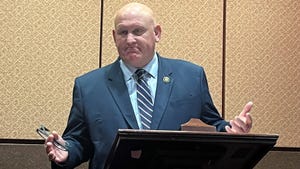
In anticipation of the House Agriculture Committee mark-up of the farm bill, Chairman Frank Lucas, R-Okla., and ranking member Collin Peterson, D-Minn., released the framework members will start with as the committee comes together July 11.
Overall the bill did not offer many surprises with many of the same components as the Senate’s version building off of work they tackled together last fall.
Highlights of the House’s Federal Agriculture Reform and Risk Management Act (FARRM)include repeal or consolidation of more than 100 programs and eliminating direct payments at a savings of $14 billion. FARRM also consolidates 23 conservation programs into 13, saving taxpayers $6 billion, similar to the Senate’s work.
The most significant policy difference in the two chambers’ bills remains how to handle food stamps. The Senate’s version contained savings of $4.5 billion while the House version cuts much deeper with a promised $16 billion in savings. The nutrition savings make up most of the difference of the $35 billion in savings in the House’s version compared to the $23 billion in the Senate’s.
Senate Agriculture Committee Chairwoman Debbie Stabenow, D-Mich., said she was “very concerned” about some of the differences, particularly how the Senate focuses on fraud and misuse to achieve nutrition savings and “the House bill takes far greater cuts in food assistance by changing eligibility rules so that some people truly in need will not receive the help their family needs.”
Peterson also conceded he would have liked to find other ways to accomplish the bill’s nutrition savings, but added “the bottom line is that, working together, we need to keep this farm bill moving forward.”
Lucas knows he must appease the conservative right by finding savings but also must not alienate House Democrats so much that they vote against the farm bill.
The other major change in the House version comes in the commodity title. Despite efforts by Southern senators the only risk management option offered in the approved Senate farm bill was its shallow-loss based Agriculture Risk Coverage to replace the eliminated direct payments, Average Revenue Crop Election (ACRE), counter-cyclical payments and Supplemental Revenue Assistance (SURE).
The House, as expected with Lucas of Oklahoma at the helm, offers a program more palatable to southern producers. The House’s Price Loss Coverage (PLC) offers deep-loss coverage and raises target prices by up to 40% to trigger payments to grain and oilseeds farmers. Commodity groups representing corn, soybean and wheat producers have expressed concern that raising target prices could wrongly distort planting decisions.
The commodity title would also allow farmers to enroll some crops or whole farms in the PLC and enroll other crops in the Revenue Loss Coverage (RLC) – a common complaint of the ACRE program which required entire farm participation regardless of crop for the life of the farm bill.
Legislative days continue to disappear and the House will be preoccupied with political votes including health care repeal and appropriations bills.
Peterson noted, “There will be challenges ahead, but we will pass the bill out of Committee and, if the House leadership gets this right and brings the bill to the floor, we will ultimately finish the bill in September.”
The House will convene at 10 am EST on July 11 to consider the farm bill. Read the draft and listen to the hearing at www.agriculture.house.gov. View the Congressional Budget Office score of the bill.
Policy is one of the most important issues facing farmers today, but often the most difficult to digest. Jacqui Fatka has a passion to decode the often difficult world of agricultural policy into terms understandable for today's ag players.
Fatka joined the Farm Progress team as E-Content Editor in August 2003 after graduating from Iowa State University. Prior to full-time employment with Farm Progress, she interned at Wallaces Farmer magazine, Iowa Sen. Chuck Grassley's press office and the Iowa Pork Producers Association and freelanced for National Hog Farmer. She also worked as a public relations consultant with Iowa Industries for the Future, an effort to bring together major players in the biorenewables industry.
Currently Fatka is a staff editor at a sister publication, Feedstuffs. For Farm Futures she regularly tells the story of ongoing agricultural policy changes. Her byline can also be found on management profiles.

Fatka grew up on a grain and livestock farm near Atlantic, Iowa. She currently lives in central Ohio with her husband Eric, and their three children - Josiah, Spencer and Avonell.
Powered by iNet Solutions Group ©2011 All Rights Reserved.