In some of its final business before five weeks of recess, the House of Representatives passed by a vote of 223-197 a drought disaster package designed to “backfill” disaster assistance that was written for only four of the five years of the last farm bill.
Everyone knew August recess was coming, yet it seemed to come without any meaningless action. All summer agricultural groups and farm state senators have been calling for action on a five-year farm bill before Congress headed home so staffers could begin settling differences on the two Chambers’ bills. In the end, there is no farm bill, no short-term extension and a bill out of the House extending livestock disaster programs but didn’t see any action by the Senate before they went home.
House Agriculture Committee ranking member Collin Peterson, D – Minn., said the bill is “better than nothing, but not what we should be doing. It’s not going to solve any problems for anyone over August.” He added it will give Congressional members something to go home and point that they’ve voted on a bill, but on a bill that won’t go anywhere in the Senate.
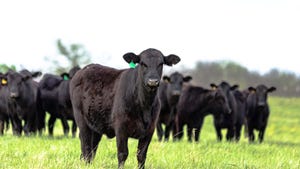
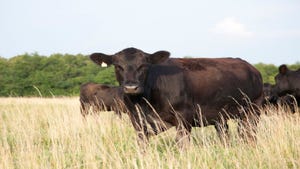
In laymen’s terms, livestock producers are not going to receive any help from the bill passed in the House because the Senate likely won’t vote on it which in turn will prevent it from ever getting to the President’s desk. “This proposed disaster package is designed to make it appear as through Congress is taking action to help farmers in need before members go home to their districts this month. However, this ill-considered action only holds farmers hostage with uncertainty, and does nothing to address specialty crops, dairy, commodities and other non-insured produce,” said National Farmers Union president Roger Johnson.
Both Senate Agriculture Committee ranking member Pat Roberts, R-Kan., and Sen. Mike Johanns, R-Neb., criticized the Senate for leaving home before acting on the bill, but it never had a chance.
And as Senate Agriculture Committee chairwoman Debbie Stabenow, D – Mich., rightly points out, the Senate’s farm bill legislation “includes critical disaster assistance provisions that go above and beyond the limited assistance the House leadership is proposing, and strengthens crop insurance to help ensure farmers are protected from future disasters.”
In a letter, a coalition of agriculture groups continued to urge action on a five-year farm bill. All of the programs the standalone disaster legislation temporarily extends could be extended for the full life of the 2012 Farm Bill if the 2012 Farm Bill were conferenced and enacted.
Thursday House Speaker John Boehner said the House remains divided on the farm bill with those on the left concerned about the food stamp reductions and those on the right feeling it doesn’t go far enough. “I haven’t seen 218 votes in the middle to pass a farm bill,” he said.
But with 223 votes in favor of the drought disaster, maybe the votes are there.
Rep. Steve King, R-Iowa, said he was troubled that House leaders decided that the disaster bill was all the legislative action that could be mustered to support the ag industry.
“Conversations I've had with my colleagues on both sides of the aisle tell me that the votes are there to get the farm bill through the House and to conference with the Senate,” King said.
If House Agriculture Committee Chairman Frank Lucas had his way, the farm bill would already be brought to the floor. He continues to stand behind the plan that a farm bill will be passed, it’s just a matter of when it will happen. He noted that everyone “may not agree on every footstep to get there, but we agree we have to get there.”
Policy is one of the most important issues facing farmers today, but often the most difficult to digest. Jacqui Fatka has a passion to decode the often difficult world of agricultural policy into terms understandable for today's ag players.
Fatka joined the Farm Progress team as E-Content Editor in August 2003 after graduating from Iowa State University. Prior to full-time employment with Farm Progress, she interned at Wallaces Farmer magazine, Iowa Sen. Chuck Grassley's press office and the Iowa Pork Producers Association and freelanced for National Hog Farmer. She also worked as a public relations consultant with Iowa Industries for the Future, an effort to bring together major players in the biorenewables industry.
Currently Fatka is a staff editor at a sister publication, Feedstuffs. For Farm Futures she regularly tells the story of ongoing agricultural policy changes. Her byline can also be found on management profiles.

Fatka grew up on a grain and livestock farm near Atlantic, Iowa. She currently lives in central Ohio with her husband Eric, and their three children - Josiah, Spencer and Avonell.

Powered by iNet Solutions Group ©2011 All Rights Reserved.